
Have a question that you don't see answered here?
Get In TouchGeneral Questions
-
Created by CNN Hero Gary Oppenheimer, AmpleHarvest.org is a free nationwide movement to diminish hunger and malnutrition in America while also helping the environment. AmpleHarvest.org makes it easy for millions of backyard and community gardeners* across the country to quickly find local food pantries that are eager to receive their excess garden bounty.
AmpleHarvest.org has received backing and support from the USDA, Google Inc., Feeding America and food banks nationwide as well as major faith-based organizations. It has been highlighted on the White House web site, PBS’s “Growing A Greener World” as well as the CNN Heroes program.
AmpleHarvest.org enables gardeners to find a food pantry near them and then view the pantries’ desired day/time for receiving donations. AmpleHarvest.org also displays personalized driving instructions to the pantry as well as (if provided) a photograph of the pantry – making it easier to find. For the benefit of gardeners during a non-growing season or anyone else interested in making a donation, AmpleHarvest.org also provides pantries the opportunity to list store bought items that they need.
Our vision is an America where millions of gardeners eliminate malnutrition and hunger in their own communities. We are accomplishing this by educating, encouraging and enabling growers, nationwide, to donate their excess harvest to the needy in their community instead of allowing it to rot in the garden. Our message to America is: No Food Left Behind.
Although there are a number of excellent programs that help farmers and community gardens get produce to food banks, AmpleHarvest.org is the only program in America that is solving hunger and malnutrition by moving information instead of moving food to help local gardeners find neighborhood food pantries. AmpleHarvest.org, Inc. is a 501(c)(3) charitable organization (EIN #27-2433274).
* Note… we consider anyone who grows food for their own enjoyment (i.e. not to be sold to others) as a gardener, regardless of the size of their garden plot. While farmers are welcome to use AmpleHarvest.org, our focus is on gardeners nationwide.
-
Food Banks are large-scale operations that collect and distribute food and other household items to local food pantries, soup kitchens, etc. Food Pantries* are local walk-in facilities where families in need go to get food. The typical food pantry operates out of a local house of worship, school, or other civic building. Most of the foods distributed by the pantries are packaged, canned or dry goods. Refrigeration is usually limited to dairy items such as milk and cheese. Produce is rarely available.
*Note: In some parts of the country, what we are calling a “food pantry” is instead referred to as a “food shelf”, “food closet”, “food cupboard”, “food share” or even “food bank”. For the sake of simplicity, AmpleHarvest.org uses only the terms “Food Bank” and “Food Pantry”.
-
No one knows for sure. According to a study by FeedingAmerica.org, in 2010, there were 33,500 in their network – an increase of 13% from 2006. There are no accurate statistics on how many other food pantries exist outside of the FeedingAmerica.org network, but by some estimates, there may now be more than 40,000.
-
While there is an increasing effort to improve access to fresh food at America’s food pantries, all to often they still have little or none to offer.
Unlike supermarkets that get fresh produce deliveries daily, food banks and other sources deliver food less frequently to pantries. Because food banks are often providing food to hundreds of pantries within a large geographic area, it’s just not possible in many cases for them to get fresh produce – especially short shelf life produce – before it spoils.
Backyard gardeners, however, can harvest their produce and deliver it to the local pantry only a short drive away. Furthermore, if the pantry client’s pick up the produce that same day, they will benefit from eating food that is even fresher than what can be purchased at a food store.
-
In an ideal world, gardeners would plant only enough to satisfy the needs of themselves and their friends. The reality of gardening (and farming in general) is that all sorts of things beyond the control of the gardener influence the ultimate size of the harvest. In a growing season with lots of sun, adequate rain, no late or early frosts, no serious pest problems, the grower gets a larger harvest. Because a gardener can never know how good (or bad) the growing season will be, they usually grow more plants than they need.
AmpleHarvest.org exists to ensure that the extra produce gets to food pantries instead of being left to rot in the garden.
-
Yes! Not everyone gardens and gardeners do not garden all the time. Food pantries need fresh produce – but they also need a variety of store bought items all year long.
Pantries are encouraged to add information to their AmpleHarvest.org page listing store bought items they are most in need of (they may also list items they don’t need!). If the pantry you found has listed store bought items they need, buy what you can afford on your next shopping trip (or check your kitchen cabinets) and drop them off at the pantry at the day/time they listed for donations.
Please check the expiration date on the items you are bringing to the pantry (from your home or from a store). Even canned goods expire. Food pantries do not distribute, and will dispose of food past its expiration date.
-
Although there are more than 8,500 food pantries across all 50 states already registered on AmpleHarvest.org, the key to the continued success of AmpleHarvest.org is increasing the public awareness of the effort.
As more pantries and gardeners learn about it, more food will find its way from backyard gardens to the kitchens of those who need it most.
You can help in two equally important ways.- Visit AmpleHarvest.org/local to see the 4 simple steps you can take to make sure your community is taking full advantage of what AmpleHarvest.org is doing in the rest of America.
- You can help to sustain AmpleHarvest.org’s efforts by making a monetary contribution. Donations of $1,000 or more earn a special listing on the AmpleHarvest.org site (and our eternal gratitude). However, any contribution, large or small, one time or recurring is greatly appreciated and will help AmpleHarvest.org diminish hunger in America. AmpleHarvest.org, Inc. is a 501(c)(3) charitable organization (EIN #27-2433274)
-

AmpleHarvest.org is at work in more than 5,800 communities across all 50 states. In all likelihood, one more more food pantries near you are already accessible to local gardeners, but many have yet to take advantage of it.
AmpleHarvest.org/government was created to help local, county, and state officials understand how this simple toolkit can strengthen and expand their community’s food safety net.
-
We’re very sorry to hear about your situation. Many people across the country are having similar difficulties.
The AmpleHarvest.org web site is designed to help food pantries in your community, where you can get food assistance, get garden fresh produce from local gardeners.
While we can’t help you directly, we know where you can get help. Please click here to find a registered food pantry in your area where you can get free food as soon as possible. You can also click here to learn about resources available from both WhyHunger.org and United Way.
AmpleHarvest.org is working hard to get healthy, freshly grown food into America’s food pantries. These two organizations can help you find one nearby.

Food Pantries
-
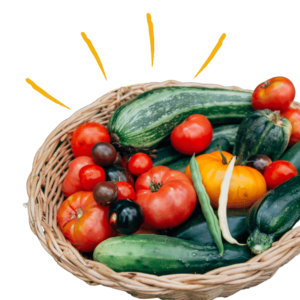
Nationwide, there are 62 million gardeners, some of whom are near you. AmpleHarvest.org educates them about their opportunity to share their surplus harvests. Once they have that harvest, they come to AmpleHarvest.org to find a nearby food pantry eager for that bounty. And you won’t need extra refrigeration (see further down in the FAQ)!
Once you have registered your food pantry on AmpleHarvest.org, your pantry becomes “visible” to the gardeners.
Now that they know about donating and have found your food pantry, every time in the future when they harvest more than they can use, they’ll be able to bring it to your pantry, and your hungry clients will be able to take it home hours later. It’s that simple.
-
Nope. None. Nada. Zippo. AmpleHarvest.org is totally free both for your food pantry (also called a food cupboard, food shelf, food closet or food bank in some parts of the country) as well as the gardeners using AmpleHarvest.org to find your food pantry.
-
AmpleHarvest.org is designed to make food pantries “visible” to neighborhood gardeners eager to share their excess harvest.
Other agencies such as soup kitchens and shelters may also take advantage of AmpleHarvest.org although our model was explicitly designed to meet the exact needs of food pantries.
The three requirements to register on AmpleHarvest.org are the agency must be:
- Located within one of the 50 states of the United States.
- A 501(c)(3) not for profit organization (most food pantries)
or a charitable organization with a 501(c)(3) fiscal sponsor
or an organization registered as a charity in their own state (some small charities)
or an IRS recognized faith organization (church, school)
or a government agency (town government for example). Note – food pantries on Native American reservations that are housed in a commercial enterprise such as a store can also register and do not need to be nonprofits. - And the donated food must be distributed at no charge to the recipient.
Individuals, ad-hoc groups and for-profit organizations may not register on AmpleHarvest.org. If in doubt, please send an email to [email protected]
Note: AmpleHarvest.org is not intended for dining facilities or meal programs that serve a general resident or community population rather than operating as a food pantry distributing food at no charge to people in need. For example, a senior living facility, cafeteria, or similar meal program would generally not qualify. Final acceptance of any program is at the sole discretion of AmpleHarvest.org.
-
Because many pantries have limited refrigeration capacity with little or no room for bulky produce such as lettuce or melons, they usually provide only canned fruits and vegetables.
AmpleHarvest.org solves this problem.
On the Pantry Registration page, you are encouraged to put the day[s] of the week and the time of day that gardeners should deliver their produce to you. You can ask them to deliver the food just before you are going to distribute it to your clients. The produce should be in and out of your pantry within 1 to 2 days at most. Any produce harvested from a backyard garden can survive quite well without refrigeration for a day or so.
-
Here are some helpful hints about registering:
- Select a user name and password that is easy for you to remember, but not easy for others to guess. You will need your email and password in the future if you want to update the information on your page. Passwords should be at least 7 characters long.
- The Street Address field should contain ONLY the address – no PO Box numbers, no floor numbers, etc. All words should be spelled out. AmpleHarvest.org uses Google Maps to help gardeners locate your pantry. If Google Maps does not recognize your address, it will not process properly. If you are in doubt, go to http://maps.google.com/ and enter your street address followed by your zip code (i.e. 123 Main Street 10024). If Google Maps shows your location properly, enter it into AmpleHarvest.org. Otherwise try testing a variation of your address. For example, if 10 Saint Marks Pl does not work, try 10 St. Marks Pl instead.
- Make sure that the State field properly displays your state.
- If you have a digital camera or smart phone, you may want to take a photograph of the front of your pantry – it may make it easier for gardeners to find.
- Many pantries are using the Additional Information field to list store-bought items the pantry needs – enabling non-gardeners to also help out your pantry.
- Be sure to list the days and times that you can accept produce donations.
Consider listing how many pounds of fresh produce you can accept at any given time. This will help farms and gleaners to know how to distribute their excess produce.
-
There are several steps you can take:
1. Wait for a confirmation email welcoming you to AmpleHarvest.org. It will include the helpful information below – and more.
2. Send an announcement to the local press and electronic media announcing your participation in AmpleHarvest.org. A sample press announcement (including AmpleHarvest.org logo graphics) is available here for your use.
3. Let other food pantries and similar agencies in your area know about the AmpleHarvest.org. You may want to email or fax information about AmpleHarvest.org to these neighboring pantries. A sample email document is available here.
4. Help inform the gardeners in your community about the opportunity to share their produce with a food pantry. Print out this garden shop flier, and ask your staff and clients to take it to your local- garden shop
- nursery
- lawn and garden section of your local Home Depot/Lowes/Sears/Wal-Mart, etc.
- hardware store
And ask them to post it by their cashier or in another conspicuous location. It can also be posted on the public bulletin board at a local
- library
- supermarket
- house of worship
- health club/recreation facility
5. If your food pantry has a web page, put a link on your page to the AmpleHarvest.org site.
Please visit the Welcome to AmpleHarvest.org page for additional helpful information.
-
You can expect gardeners in your area to share their excess garden produce with your food pantry when
- Your food pantry registers at AmpleHarvet.org -and-
- When the gardeners in your area learn about donating food to your food pantry -and-
- When their garden is ready for harvest and they have more food than they can use -and-
- When you’ve told b your food pantry listing on AmpleHarvest.org, to come.
In short, it could be tomorrow or it could be next summer. It is important to remember that this is the excess food at the peak of a harvest season. Industry experts estimate that more than 61 million (up from the pre-COVID-19 estimates of 42 million according to the National Gardening Association,) American households grow fruit, vegetables and herbs and nuts, and they grow a LOT of food – enough excess food to feed 28 million Americans.
How much produce may be donated and when will vary greatly based on what part of the country you are in, the time of the year, what type of growing season your region experienced, and how the backyard gardeners in the area prefer to plant their gardens. It also depends on what crops different gardeners decide to grow and on the weather and pest issues of a given year.
While it is difficult to predict when or how much produce your local gardeners will bring in, you can encourage them! Your staff and your clients can help influence the gardeners in your community to share their produce with a local food pantry. Please visit the Informing the Gardener page to learn more.
-
That is up to you and the donor. Our experience has been that in the vast number of cases, growers are happy to drive the food to your food pantry.
If you have access to a car or van and are willing to transport the food, you can then get food from a grower who does not drive or has no access to public transportation. Either they will arrange to get the food to you or they may need to share it with another food pantry in the community.
-
Absolutely YES.
Nationwide, we are seeing a resurgence of gardening in cities–abandoned plots, community gardens, roof top gardens, and even “upside-down” tomato growing. Even the White House has its own vegetable garden! Someone growing in the city can harvest as much as their rural counterparts. All they need is good soil, sun, rain and like every other gardener, some luck.
-
An important lesson in life if that all constants are variable – including your contact information, the hours you are open, and maybe even your address (pantries do occasionally move to new locations).
First and foremost, you have full control over your food pantry listing. By logging into your pantry admin page, you can then make any changes you need, whenever you need to.
However, we know that some changes may get past you. Or possibly you retire and your replacement doesn’t even know about AmpleHarvest.org and therefore can’t keep information up to date.
Since we want make sure that the gardeners will be able to contact you or donate as easily as possible, AmpleHarvest.org will once per year, email or even phone
*your pantry to make sure that the information is current.* We don’t actually call, but we hire a nonprofit called “NTI” that itself hires people with disabilities to make the calls and update the information when needed. Read more about NTI here.
-
Yes.
Both programs work very hard to get fresh garden produce to the food insecure. AmpleHarvest.org is focused on getting fresh produce from millions of gardeners across all 50 states to local food pantries and Plant-a-Row for the Hungry (PAR) is available in those communities where they are set up to operate. AmpleHarvest.org offers gardeners nationwide online real-time information about their neighborhood pantries. Additionally, AmpleHarvest.org also offers gardeners and non-gardeners alike, the opportunity to see what store bought items the food pantries in their community are most in need of. A food agency can easily participate in both programs.
-
Some food banks have expressed an interest in receiving this information so you should contact yours to see if this information would be helpful to them.
Gardeners are welcome to send an email to [email protected] when they share their bounty. AmpleHarvest.org itself does no tracking of gardeners seeking food pantries nor the amount of produce donated.
-
AmpleHarvest.org is designed to help millions of gardeners find food pantries and donate their excess crops to them. Soup kitchens and shelters operate differently from pantries in that they require all of the needed ingredients for a meal to be on-hand for every meal. Since local gardeners donate their produce when they harvest and only if/when they want to, you can’t be assured of a steady supply of produce from the gardeners.
If you can operate with the unpredictability of the gardener’s donations, then yes, you may register at AmpleHarvest.org. If however, you need to be assured of a steady supply of produce, you should instead rely on other sources.
-
YES.
You can complete your pantry sign up and fill out all the fields on your listing to let people know what store bought items you need, such as pasta, cereal, toothpaste, etc. Update it as often as necessary by selecting Register/Update a Pantry, and then entering your username and password in the “Existing Pantries Log in Here” section on the left side of the screen.
-
AmpleHarvest.org works with nearly every food bank in America as well as with Feeding America itself. Because the food banks have direct access to their member agencies, we count on the food banks to help agencies learn about AmpleHarvest.org and encourage them to register themselves. This is good for the food bank because it help the agencies get access to freshly harvested and locally grown food and because it enables local food drives to get the collected food directly to the agency without bogging down the food bank with the task of sorting and distributing food donated by individuals – thereby cutting the operating costs for the food bank.
Several resources are available for food banks to share with their agencies:
- Food Pantry Registration Information
- Fliers for food pantries
- Video from our founder explaining AmpleHarvest.org in Indian Country
Please urge your agencies to see if they might already be registered on AmpleHarvest.org before possibly re-registering themselves by going first to Find a Pantry and entering their zip code. If their food pantry does not show up, they should register it.
While we strongly encourage individual agencies to register themselves at AmpleHarvest.org, some food banks have asked to “bulk load” their agencies. If your food bank wants to take that approach, please populate the bulk load spreadsheet and follow the enclosed instructions.
Lastly, if your food bank is hosting a conference or meeting for all of your agencies and you are looking for a keynote speaker, check out our speaker page and then email [email protected] with the date and location – someone will get back to you within a few hours.

Growers
-
You, the gardener or small farmer, will be critically vital to your community this 2020 growing season to help reduce hunger and improve the quality of food available for your hungry neighbors. Consider expanding your garden if you have the space to grow more food specifically for donation this year.
To keep yourself, the food pantry staff and the hungry families safe, please follow these guidelines:
1. If you are under the weather, coughing or sneezing, or have a fever, don’t harvest food for your family or donation until you are better. Maybe ask a friend to do it for you (remember…stay 6 feet away from them)
2. Wash your hands thoroughly with soap. AND use your gardening gloves from harvest to donation. Don’t have gardening gloves? Consider your winter gloves or maybe dish washing (wash with soap like your hands first) gloves instead.
3. If you are going to use the food for your own family, wash it thoroughly. Using warm soapy water can add extra protection. If you cook the food, the cooking kills any virus that may be present.
4. When you take the food to the food pantry, call them ahead of time and tell them exactly when you expect to arrive. Agree to a specific location at the food pantry where you will leave the food so that you can drop it off and then immediately step away more than six feet before the staff retrieves the food. Both parties should be wearing gloves.
5. When you are done, wash your hands again.
This is a difficult time for America. AmpleHarvest.org and gardeners like you can make it a bit less difficult for everyone.
-
Great question – We could use your help!
Food pantries are often “under the radar”–they do not have a web site, signs on the front door, or a phone book listing. That is why we created AmpleHarvest.org, to make it possible for growers to find a pantry in their neighborhood.
If we do not list a pantry in your area, please help us find one. How? See if a place of worship or other civic organization in your community has one. Call your regional food bank (www.feedingamerica.org can help you find it) and ask them if they can help you.
Once you do find one, contact them to see if they’ll accept your produce. ALSO, please ask them to visit AmpleHarvest.org or print out the food pantry flier and give it to them. You can also ask them to contact the other nearby food pantries to let them know about AmpleHarvest.org. If they are not Internet savvy, you may want to help them register on AmpleHarvest.org.
Once they are registered, the next backyard gardener in your area looking to share their bounty will not experience the problems you did.
-
First and foremost, see if they have a preferred delivery day of the week and time of day listed. It is important to adhere to the pantries scheduling information if they provide it to make it easier on their operations. If no day/time is listed, call or email them to find out when they would like you to deliver the produce.
On the day of your planned delivery, harvest your crops in the early morning while they still have some of the coolness of the evening air. If they have dew, wipe them dry with a paper towel. Each item should be visually inspected for serious bruising, insect damage, and ripeness. Do not donate produce that you would not feed your own family. Produce that is overripe, has mushy spots, or is seriously blemished should either be made into a soup, stew, or go into a compost pile but not donated. (Note, if you used any pesticide on your garden, please take the time to clean each piece of produce as recommended by the pesticide manufacturer on the label before you let anyone eat it.)
Next, unless they have given you other instructions, package your produce in paper supermarket bags and take them to the pantry at the requested time. If you find the pantry convenient to get to, you can continue to share your produce with them through the rest of the growing season. Alternatively, you may decide to go back to AmpleHarvest.org next time and select a different pantry – sharing your produce with several pantries.
Please let the pantry know that you found them through AmpleHarvest.org.
Lastly, please remember to let your fellow gardeners know about AmpleHarvest.org, so they can share the bounty of their garden at their harvest time. You can send us a photo of your donation at [email protected]!
-
Yes! The produce you bring will be pooled with that of other backyard gardeners in your area. For all you know, the next gardener might bring only 3 tomatoes and two bags of cucumbers.
Remember, the key thing is that food should not be wasted, especially when so many Americans are having a hard time feeding their families.
Your bounty, large or small, will help to diminish hunger in America.
-
Donations may be tax deductible, provided you can determine the fair market value of your donation. We spoke to our tax experts but you’ll need to talk to yours to get an answer that will be applicable to your situation. You may print out a food donation receipt and use it to help document the donation.
-
Most do not – they are perfectly happy with fresh produce, organic or not. HOWEVER, you may want to let the pantry know if you use organic methods in case one of their clients prefers it. However, with organic methods, you can harvest healthier food without depleting the earth as much.
Please click here for a number of recommended links to help you grow a healthy garden.
-
We’d love to know about it. Send an email to [email protected] and let us know how much produce you were able to share. You might also want to visit our Facebook page and post the information there too.
There is no need to identify yourself if you don’t want to, simply sign it with your initials and your city and state.
-
Just because you know about the pantry does not mean that other backyard gardeners in your area also know about it.
Please make every effort to inform the pantry about AmpleHarvest.org. The key to success of the movement is to have as many food pantries as possible listed on the site.
You can visit the pantry and suggest that they go to www.AmpleHarvest.org to list their pantry. If they do not have Internet access, print out the pantry flier along with the Top10 reasons to join AmpleHarvest.org flier and give it to them. They may need your help to actually do the registration, but please do not register them yourself without their knowledge. Please remind them that there is absolutely no cost or obligations involved with listing on AmpleHarvest.org.
-
You are protected by the Emerson Good Samaritan Food Donation Act signed during the Clinton administration. The Act is intended to encourage donations of food to nonprofit organizations while providing the donor with “Good Samaritan” protection. You are provided protection from criminal and civil liability providing you did not exhibit gross negligence. The text of the act can be read here. Although the text doesn’t explicitly mentioned garden produce, a followup clarification from the USDA (scroll to table 1) affirms that gardeners donating garden produce are protected by the act.
-
Yes. Both programs work very hard to get fresh garden produce to the food insecure, in different but complimentary ways. AmpleHarvest.org is focused on getting fresh produce from millions of gardeners across all 50 states to local food pantries, whether they planted extra on purpose—with PAR, for example—or accidentally ended up with too much. AmpleHarvest.org offers all gardeners nationwide, including those participating in Plant-A-Row, online real-time information about their neighborhood pantries. Additionally, AmpleHarvest.org also offers gardeners and non-gardeners alike, the opportunity to see what store bought items the food pantries in their community are most in need of. A food agency or gardener can easily participate in both programs.
-
We really need your support. Making a small monthly contribution is critical to helping us reach more gardeners like you.
-
Yes. Make a short (really short) video for us.
Food pantries across America were invited to say “thank you” to gardeners like you that donate food from their garden (examples at www.AmpleHarvest.org/feedback.) Take a moment to let it soak in – you are really making a difference in your community.
We would LOVE to also have a very short video from you for the food pantries, hungry families and others to see – videos that express how donating food makes you feel. This is all about neighbors helping neighbors on a nationwide basis. All we’re asking for is a 30 or 45 second video (and for sure, nothing longer than 60 seconds) on your phone or computer. Just follow these 5 easy steps.
1. Please start the video with something like: Hi – I’m << first name only>> from <<your state>>.
2. Then continue with
I donated food to an AmpleHarvest.org member food pantry
or
I’m thrilled to be connected to a local food pantry.
3. Then continue with your “how I feel” message. Take a moment to explain what motivates you to donate (“I hate seeing food go to waste” or “I want to help hungry neighbors” or “I know how important healthy food is for people with health issues” for example), how you feel when you drop it off at a pantry, what (if anything) hungry families there might have said to you, etc. You can also include, if you wish, a bit about what you donated (“Last time, I dropped off a bag of freshly harvested tomatoes….” for example)
4. Be sure to say something that might encourage other gardeners like “you can do it too!” or “seeing their smiles really makes my day” etc., at the end.
5. Then upload the video to drop box.
Food pantries love hearing from the gardeners, hungry families appreciate your donations, and other gardeners will learn about donating thanks to you.
Note: These videos will be shared online with the food pantries and other gardeners on social media. Please do not include anyone in the video that doesn’t want to be recorded, and please do not include any personally identifiable information. Remember…. use your first name and state only.
Supporters
-
When you donate to AmpleHarvest.org, you’re fueling a nationwide, long-term solution that improves America’s food safety net – not just for today, but for generations to come.
Instead of purchasing or transporting food, your donation helps bridge millions of home and community gardeners with nearby food pantries, enabling them to share surplus harvests directly with families in need. Because food is donated locally and seasonally with zero costly logistics (no warehouses, no trucks, etc.), your tax-deductible gift creates a self-sustaining ever expanding source of fresh, healthy food for communities across the country.
You may want to visit https://www.AmpleHarvest.org/ourimpact to see how your financial support grows year after year.
In summary, your donation empowers communities to nourish themselves — using food that would otherwise go to waste — without requiring expensive infrastructure or constant fundraising.
-
Every dollar you donate helps:
• Grow and maintain the AmpleHarvest.org registry of 8,300+ food pantries nationwide• Expand outreach to millions more gardeners who have surplus harvests to donate• Support Native American reservations and disaster-affected areas through targeted programming• Educate gardeners, faith leaders, and communities on how to donate food safely and sustainably• Keep our platform free and accessible to anyone who wants to help end hunger and food waste• Raise public awareness through digital campaigns, media outreach, and partnerships with trusted organizationsBecause AmpleHarvest.org operates with an ultra-lean staff (only four people!) and leverages major in-kind support from corporate partners, your donation has exceptional impact efficiency.
-
Food drives are important — but they are often short-term, supply-driven events that gather canned or packaged food. AmpleHarvest.org focuses on building a sustained, fresh-food pipeline between gardeners and pantries.
When you donate to AmpleHarvest.org, you help:
• Prevent food waste at the source (before it ever becomes waste)• Provide fresh fruits, vegetables herbs and nuts that pantries rarely if ever receive through traditional donations• Strengthen local food systems without relying on costly trucking, storage, refrigeration or staffing• Empower ongoing, community-led solutions instead of temporary handoutsSimply put:
Food drives feed people for a day.
AmpleHarvest.org helps feed communities feed themselves forever. -
Very.
AmpleHarvest.org was designed from the beginning to be a sustained, low-cost, high-impact solution.
Because we don’t handle, transport, or store food ourselves, we avoid the massive overhead costs that traditional hunger-relief organizations face. Instead, we invest in technology, outreach, education, and partnerships that make it easy for gardeners and pantries to connect on their own – over and over again, year after year.
This means that each dollar you donate today keeps working tomorrow, helping gardeners share healthy food within their own communities, at no additional cost.
-
There are many ways your company can help grow AmpleHarvest.org’s impact!
• Financial support: Sponsor our expansion into more communities, or match employee donations. We are always looking for new corporate social responsibility partners anywhere in the country. Companies donating at least $10,000 can sponsor all of thefood pantry listing in their home state, highlighting for all to see, their care for communities across the state.• Cause Marketing Programs: Create a sales campaign that promises to make a donation for every purchase or subscription. Past experience has shown that these are very successful both in driving sales as well as public awareness.• Payroll donation/matching program:o Encourage employees to donate one time or as part of a monthly payroll donationo Invite different offices or regions to competeo Whichever you choose, matching the donation doubles the impact and generates excitement in the campaign• In-kind donations: Provide marketing, technology, or professional services.• Employee engagement: Encourage team members who garden to donate their surplus harvests through AmpleHarvest.org.• Awareness campaigns: Help spread the word to customers and communities who care about hunger, health, and sustainability.We’re always happy to talk about custom partnership opportunities. Please contact us at [email protected].
-
Yes – and thank you for helping in both ways!
When you donate surplus food to a pantry, you make an immediate difference for families in your community. When you donate money to AmpleHarvest.org, you help make sure that millions more gardeners can do the same – by expanding our network, educating more people, and strengthening the food safety net nationwide.
Think of it this way:
Your food donation helps today.
Your financial donation helps thousands more gardeners help tomorrow.Both are vital, and we’re grateful for your support.
-
Transparency is important to us.
You can view our annual report, audited financial statements and IRS Form 990 filings online.
We are proud to operate with a commitment to efficiency, stewardship, and the highest standards of nonprofit accountability.